What to Share When Clients Ask for a Pentest Report?
When a security assessment concludes, the immediate instinct is to take the resulting document and pass it along to clients or partners as proof of due diligence. STOP. This is a common mistake in how these findings are communicated. Many organizations mistakenly share the "Deep-Dive Engineering Report" when they should be sharing the "Remediation Report". This distinction is not just a matter of semantics. It fundamentally changes how your security posture is perceived by outside stakeholders.
The internal engineering report is a technical manual designed for developers and systems administrators. It contains granular details about exploit strings, specific code vulnerabilities, and technical reproduction steps. While this is invaluable for your internal team, it is often too much information for a client. Sharing this level of detail can inadvertently expose the inner workings of your infrastructure. It creates more noise than clarity for someone who just needs to know if your platform is safe to use.
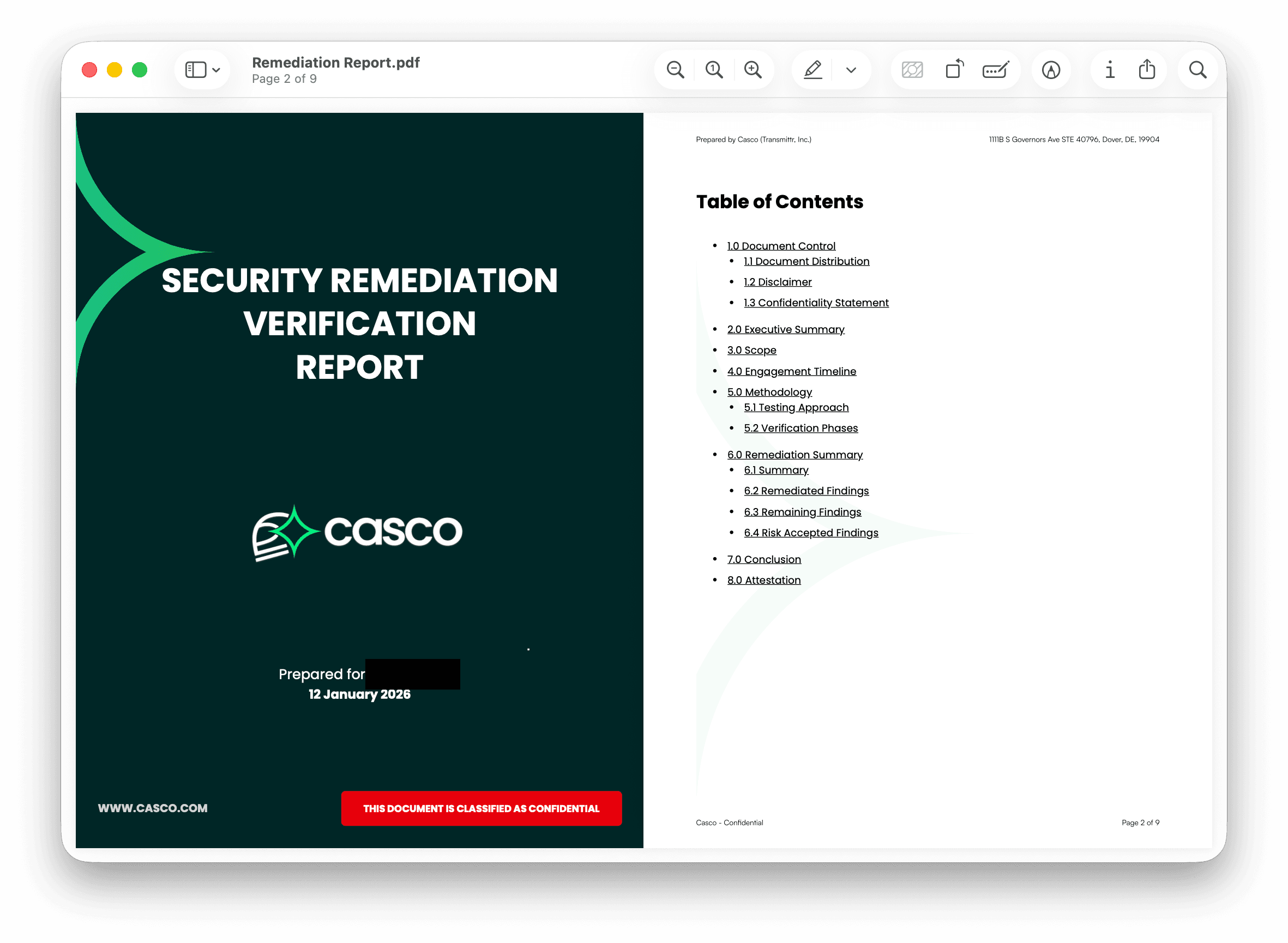
The Power of the Remediation Report
A remediation report serves a different purpose entirely. It communicates a narrative of responsibility and action. Instead of focusing on the "how" of a vulnerability, it focuses on the "what was done." This document shows that a weakness was identified and, more importantly, that it was successfully resolved. It demonstrates a mature security lifecycle where testing leads to concrete improvements rather than just a list of problems.
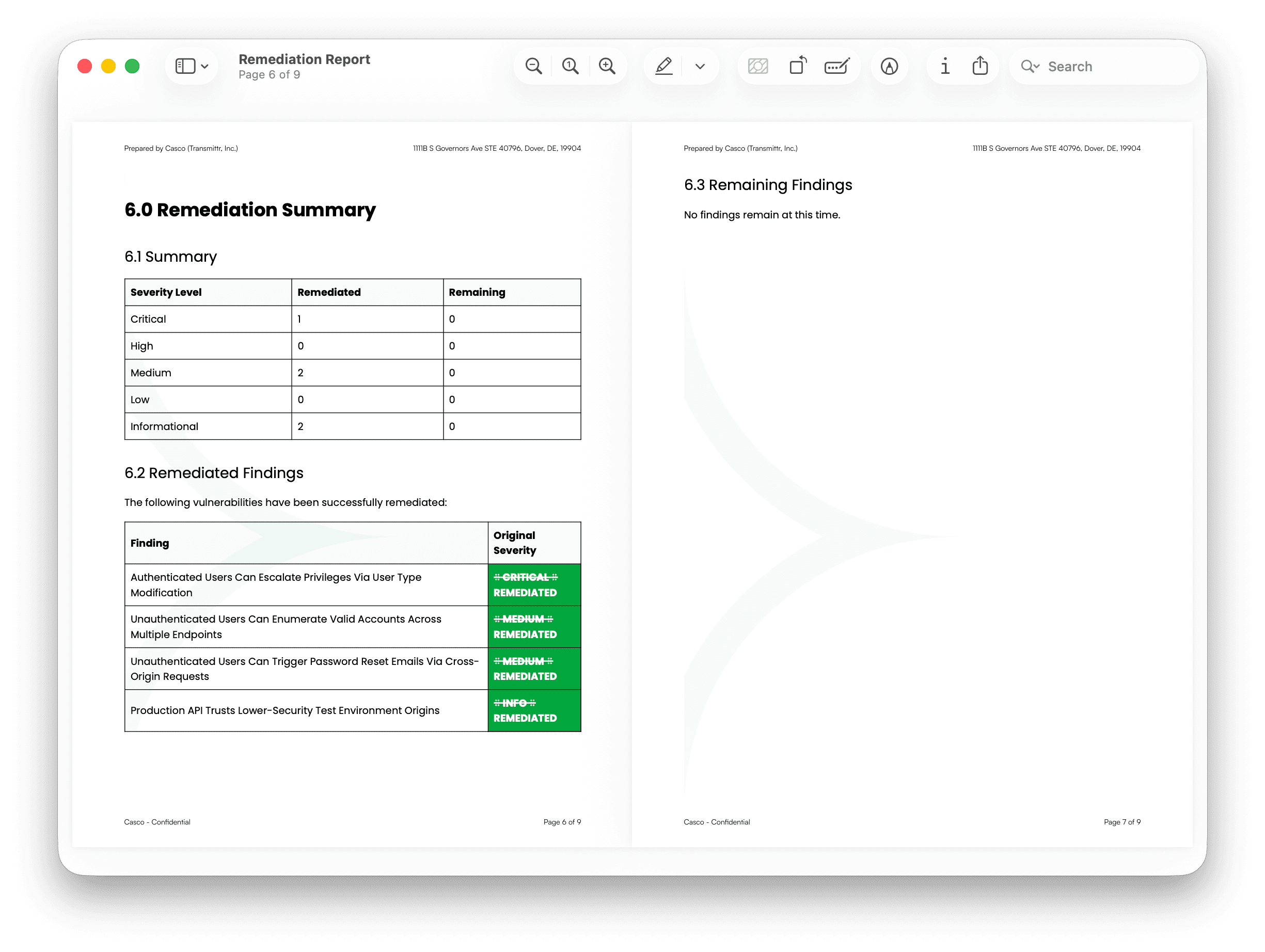
Clients and auditors are looking for evidence of a functioning security program. When you provide a remediation report, you are showing them that your organization is proactive. It shifts the conversation from a snapshot of technical flaws to a long-term commitment to safety. This build-up of trust is essential in modern business where security is a primary concern for every procurement department.
The Danger of the "Clean" Pentest Report
There is a persistent myth that a "clean" pentest report with showing zero findings is the gold standard. In reality, a report with no findings often signals a lack of depth in the testing process rather than a perfect system. Modern software environments are far too complex for there to be zero vulnerabilities. A report showing no issues can actually raise red flags for sophisticated clients who understand the reality of cyber threats.
A clean report suggests that the scope was too narrow or the methodology was not rigorous enough. It can look like a "check-the-box" exercise rather than a legitimate attempt to secure data. In contrast, a report that shows a dozen critical findings followed by proof of their remediation is far more impressive. It proves that you have the tools and the talent to find and fix the problems that actually exist.
Communicating Resilience over Perfection
Using a (supervised) agentic solution like Casco Supervised allows for massive coverage and speed. This means your remediation reports will likely be more robust because our agents find things human testers often overlook. Unlike lower-level scans, our Level 5 supervised agentic testing provides enterprise-grade findings with proper documentation. By sharing a report that highlights this cycle of discovery and resolution, you are communicating resilience. You are telling the world that your systems are under constant, high-level scrutiny.
The goal of security communication is to provide confidence. You want your partners to know that you are not hiding from vulnerabilities, but actively hunting them down. This approach transforms the pentest from a scary technical audit into a powerful sales tool. It validates your security claims with hard evidence of your team's ability to react and protect.
Is your current reporting process providing a roadmap for engineering, or a certificate of trust for your clients?
Get a sample pentest report by booking a walkthrough of the findings and remediation evidence. Our reporting policy explains why Casco preserves resolved findings in remediation reports. Contact Casco to discuss the scope and documentation your reviewer needs.
Before booking your next engagement, compare the reporting and retesting commitments in each pentest quote. Confirm that the documentation your customer needs is included.